


World Refugee Day at Fenix
From 16 to 20 June, Fenix marks World Refugee Day with films, dinners, conversations and art. A week to reflect on what it means to be forced to flee and begin again far from home.
20 June is World Refugee Day. This international day draws attention to people who are forced to flee worldwide. The United Nations established the day to reflect on their situation and to show that these people are welcome.
Live painting and Q&A with Abdalla Al Omari
Artist Abdalla Al Omari will add a new face to his artwork, The Boat (2017), on June 20. In the painting, world leaders such as Donald Trump, Vladimir Putin and Angela Merkel are not seated around a conference table, but placed together in an uncertain position. The artwork is never finished: leaders come and go, but the consequences of their decisions remain. On this day, visitors can watch as Al Omari adds a new face to the painting. Which world leader it will be remains unknown until the moment itself.
View the full programme below:

Watch Dreamers and A World Not Ours: two films about people living in diaspora, leaving home and finding their way through systems. Afterwards, there is a shared dinner in collaboration with Stichting Mano.

Every year on World Refugee Day (20 June), people around the world pause to reflect on those who have been forced to flee. In this context, IFFR is organising a special programme on Wednesday 17 June, in collaboration with the Buddy Film Foundation and Fenix, and made possible in part by UNIQLO.
The programme consists of two events: a workshop for filmmakers with a refugee background at Fenix, organised by the Buddy Film Foundation, and, for the public, a screening at LantarenVenster of the Displacement Film Fund short films, which had their world premiere earlier this year during IFFR 2026.

This edition: Koken met Status. An ode to the women who rebuild their lives and support their families after a life-changing decision.

On World Refugee Day, Abdalla Al Omari continues working live on this artwork from the Fenix collection. Which new face will he add? Only he knows.

During Nacht van de Vluchteling, thousands of people walk 10, 20, 40 or 50 kilometres. By taking part, participants raise money for Stichting Vluchteling’s emergency aid projects. This year too, the Rotterdam routes set off from Fenix.
In the exhibition
Part of Fenix’s collection is Rooted (2011–2018), a series by Henk Wildschut. In refugee camps in Tunisia, Jordan and Lebanon, he photographed the many improvised gardens he came across near tents, planted by people forced to put down roots in foreign soil. Rooted explores the longing for a dignified life and a place to call your own.
This series is part of the exhibition All Directions.
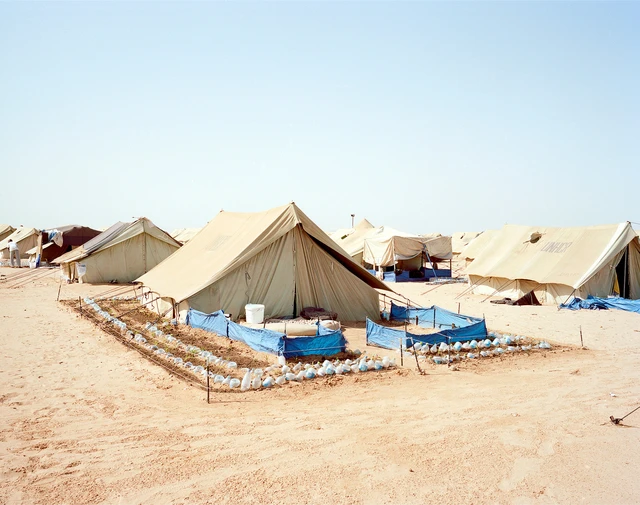
Choucha Camp, Tunisia, (2011). Henk Wildschut (The Netherlands, 1967)